
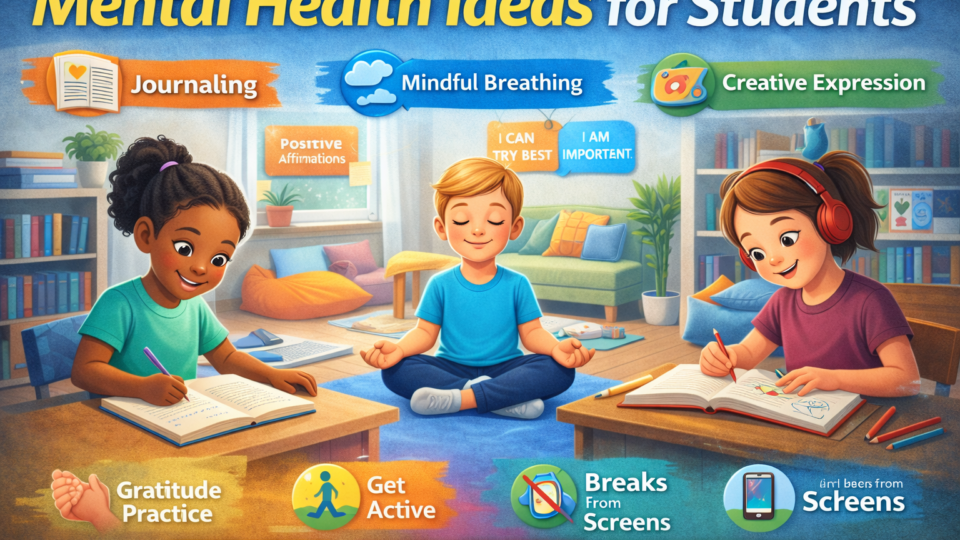
Mental Health Ideas for Students: Practical Ways to Build Wellbeing and Balance
Mental health plays a vital role in a student’s success, confidence, and overall quality of life. Academic pressure, social challenges, and constant digital exposure can affect emotional balance at any age. That is why mental health ideas for students are essential in schools, colleges, and even at home.
This guide shares simple, effective, and age appropriate mental health ideas that support emotional strength, focus, and long term wellbeing.
Why Mental Health Matters for Students
Mental health affects how students think, feel, and act. It influences learning, decision making, and relationships. When mental wellbeing is supported, students perform better academically and socially.
According to World Health Organization, mental health is a key part of overall health, not separate from physical wellbeing. Early support helps prevent long term challenges.
Common Mental Health Challenges Students Face
Students experience different pressures depending on age and environment.
Common challenges include:
- Academic stress
- Fear of failure
- Social anxiety
- Low self esteem
- Screen overload
- Lack of sleep
Recognizing these challenges is the first step toward healthy solutions.
Daily Mental Health Ideas for Students
Mental wellbeing improves with small, daily habits. These ideas are easy to include in school or home routines.
Mindful Breathing Breaks
Short breathing exercises calm the nervous system. Students can practice slow breathing for two to three minutes between tasks.
This helps reduce anxiety and improves concentration.
Journaling Thoughts and Feelings
Writing helps students process emotions. A few minutes of journaling each day allows them to reflect without judgment.
Prompts like “How do I feel today?” work well.
Gratitude Practice
Students can list three things they feel thankful for. Gratitude shifts focus from stress to positivity and builds emotional resilience.
Mental Health Activities for the Classroom
Teachers play a powerful role in supporting student mental health.
Emotional Check In Circles
Start the day with a quick emotional check in. Students can describe their mood using words or colors. This builds emotional awareness and trust.
Calm Corners
Create a quiet space where students can pause, breathe, or reset. This helps regulate emotions without punishment.
Positive Affirmations
Short affirmations like “I can try again” help build confidence. Display them in classrooms or repeat them together.
Mental Health Ideas for Students at Home
Support should continue beyond school.
At home, students benefit from:
- Consistent routines
- Open conversations
- Screen free time
- Family meals
Parents and guardians can model healthy emotional behavior through calm communication.
Physical Activity and Mental Health
Movement has a direct impact on mental wellbeing.
Simple activities include:
- Walking
- Stretching
- Yoga
- Dancing
Physical activity releases stress and improves mood naturally. Even short sessions make a difference.
Creative Mental Health Ideas for Students
Creativity supports emotional expression.
Art and Drawing
Drawing feelings helps students express emotions they cannot explain with words. There is no right or wrong result.
Music and Rhythm
Listening to calming music or playing simple rhythms can reduce anxiety and improve focus.
Storytelling
Encourage students to write or tell stories. This builds empathy and emotional understanding.
Mental Health Support for Different Age Groups
For Primary School Students
Focus on emotional identification and safety.
- Emotion cards
- Simple breathing games
- Story based discussions
Keep activities playful and short.
For Teenagers
Teen students need independence and respect.
- Mindfulness apps
- Goal setting journals
- Peer support groups
Allow privacy while staying supportive.
For College Students
College life brings pressure and responsibility.
- Time management planning
- Stress management workshops
- Mental health counseling awareness
Encourage help seeking without stigma.
Reducing Academic Stress
Academic pressure is a major mental health factor.
Helpful strategies include:
- Breaking tasks into steps
- Realistic goal setting
- Scheduled breaks
- Focused study sessions
Rest is productive. Burnout helps no one.
Digital Wellbeing for Students
Technology affects mental health more than ever.
Encourage:
- Screen time limits
- Digital free hours
- Healthy social media habits
Students should understand that online comparisons are not real life.
FAQ: How Can Schools Improve Student Mental Health
Schools can support mental health by creating safe environments, training teachers, encouraging open dialogue, and offering counseling support. Small changes create lasting impact.
FAQ: How Often Should Mental Health Activities Be Practiced
Daily short activities work best. Consistency matters more than length. Even five minutes can improve emotional balance.
FAQ: Can Mental Health Ideas Improve Academic Performance
Yes. When students feel emotionally supported, focus and motivation improve. Mental health and academic success are closely linked.
Creating a Supportive Mental Health Culture
Mental health support should feel normal, not special. When students feel safe expressing emotions, they develop confidence and self awareness.
Encouragement, patience, and understanding shape healthy minds.
Final Thoughts
Mental health ideas for students do not require complex programs or expensive tools. Simple habits, open communication, and supportive environments make a powerful difference.
When students learn to care for their mental wellbeing early, they gain skills that support them for life. Start small, stay consistent, and place wellbeing at the center of learning.

Leave a Reply