
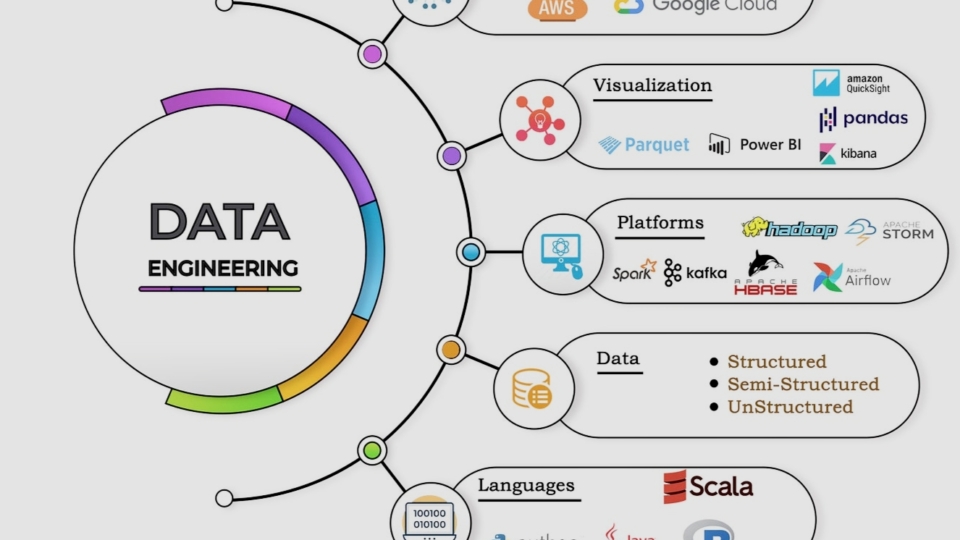
Data Engineering Services develop the Backbone of Modern Data-Driven Businesses
In today’s digital economy, data is often described as the “new oil,” but raw data alone has little value unless it is properly refined, structured, and delivered to the right systems. These services form the foundation of any successful data strategy, enabling organizations to transform scattered data into actionable insights that drive smarter decisions.
Data engineering services focus on designing, building, and maintaining systems that collect, store, and process large volumes of data. Unlike data science, which emphasizes analysis and modeling, data engineering ensures that high-quality, reliable data is available for those analytical processes. Without strong data engineering, even the most advanced analytics tools cannot function effectively.
The Core Components of Data Engineering Services
At the heart of data engineering services are several key components that work together to create a robust data infrastructure. The first is data ingestion, which involves collecting data from multiple sources such as applications, databases, IoT devices, and external APIs. This data can be structured, semi-structured, or unstructured, and must be captured efficiently in real time or batch mode.
Next is data storage. Organizations use various storage solutions such as data lakes, data warehouses, or hybrid systems depending on their needs. Data lakes are ideal for storing raw, unprocessed data, while data warehouses are optimized for structured data and fast querying. Choosing the right storage architecture is critical for scalability and performance.
Data processing is another essential element. This involves cleaning, transforming, and organizing data so it can be used for analysis. Processes like ETL (Extract, Transform, Load) or ELT (Extract, Load, Transform) are commonly used to prepare data for business intelligence tools and machine learning models.
Finally, data orchestration and pipeline management ensure that all these processes run smoothly and automatically. Modern data pipelines are designed to handle massive data volumes while maintaining speed and reliability.
Why Businesses Need Data Engineering Services
Organizations across industries rely on data engineering services to remain competitive. One of the primary benefits is improved decision-making. By ensuring that accurate and timely data is available, businesses can make informed decisions based on real insights rather than assumptions.
Another advantage is scalability. As companies grow, the volume of data they generate increases exponentially. Data engineering services provide scalable solutions that can handle this growth without compromising performance.
Data quality and consistency are also major benefits. Poor-quality data can lead to incorrect conclusions and costly mistakes. Data engineers implement validation and monitoring systems to ensure data accuracy and integrity.
Additionally, these services enhance operational efficiency. Automated data pipelines reduce manual work, minimize errors, and allow teams to focus on higher-value tasks such as analysis and strategy.
Modern Tools and Technologies
Data engineering services leverage a wide range of modern tools and technologies. Cloud platforms such as, and provide scalable infrastructure for data storage and processing.
These technologies allow organizations to process data faster, reduce costs, and improve overall system performance.
Challenges in Data Engineering
Despite its advantages, data engineering comes with its own set of challenges. One common issue is handling data from diverse sources and formats. Integrating this data into a unified system can be complex and time-consuming.
Another challenge is maintaining data security and compliance. With increasing regulations around data privacy, organizations must ensure that their data pipelines are secure and compliant with legal standards.
Performance optimization is also critical. As data volumes grow, systems must be carefully designed to maintain speed and efficiency. This requires continuous monitoring and optimization.
The Future of Data Engineering Services
The future of data engineering is closely tied to advancements in automation and artificial intelligence. Automated data pipelines, real-time analytics, and intelligent data management systems are becoming more common. These innovations reduce the need for manual intervention and enable faster insights.
Data engineering is also evolving to support emerging technologies such as machine learning, IoT, and edge computing. As these technologies generate more data, the demand for efficient data engineering services will continue to grow.
Conclusion
Data engineering services are the backbone of modern data-driven organizations. They enable businesses to collect, process, and utilize data effectively, turning raw information into valuable insights. By investing in robust data engineering solutions, companies can improve decision-making, enhance efficiency, and stay ahead in an increasingly competitive landscape.
As data continues to grow in importance, the role of data engineering will only become more critical. Organizations that prioritize strong data infrastructure today will be better positioned to succeed in the future.








Leave a Reply